
Winston-Salem Open Records Map
North Carolina General Statute 132-1 defines a public record by its connection to public business, not by whether it is paper or digital. Access still turns on the custodian and any law that protects a field or file. In Winston-Salem, city departments hold municipal files, Forsyth County offices keep deeds and tax records, and the state Judicial Branch administers court material.
| Record set | Keeper | Online reach | How access works |
|---|---|---|---|
| Deeds, plats, liens, assumed names | Forsyth Register of Deeds | Some instruments from 1849; formal recording from 1913 | Free index and land images; counter or mail copies |
| Civil, criminal, estate, and divorce cases | Clerk of Superior Court | eCourts Portal; historic online start not stated | Portal lead, courthouse terminal, then file inspection |
| Property, tax, GIS, and sales | Forsyth Tax Administration | Current parcel tools; sales since 2021 | Free portal, map viewer, or counter |
| Birth, death, and marriage | Register of Deeds and NC Vital Records | Local index only, no certificate images | Plain copy open locally; certified copy limited by law |
| Incident and custody information | Forsyth Sheriff and state agencies | Current web tools vary by record | Public portions online or from the records desk |
| Permits and code files | City-County Planning | BuildIT and GeoCivix | Portal or focused Chapter 132 request |
Open status does not make every field visible. Sealed and expunged court matters, juvenile and adoption files, actual Address Confidentiality Program locations, protected voter identifiers, and specified birth data remain closed. Criminal intelligence and investigative material also falls under special rules. A custodian may redact protected fields and release the rest.
Note: A record can be open while a protected field within it must still be redacted before release.
Winston-Salem Deed Records Search
The Forsyth County Online Record Search is free. It indexes deeds, deeds of trust, plats, assumed names, powers of attorney, agreements, and other recorded instruments. Real-estate results can link to document images. Recording date means the date the office indexed the instrument, which may differ from the date the parties signed it.
| Portal control | Input type | Needed? | Verified use |
|---|---|---|---|
| Record Type | Tab or menu | Yes | Choose land, birth, death, marriage, or an available miscellaneous set |
| Last/Company Name | Text | Depends on search | Enter a surname or entity and try spelling variants |
| First Name | Text | No | Narrow a person-name result |
| Party Type | Selector | No | Choose grantor or grantee for land records |
| Instrument Type | Dropdown | No | Narrow to a verified recorded-document class |
| Begin/End Date | Date pair | No | Limit the recording or event range |
| Book/Page or Document Number | Text | No | Retrieve a known record directly |
Results may show names and party roles, instrument type, recording date, book and page or document number, and an image link. Use the Register’s counter when an index search fails. Plain real-estate copies cost $0.25 per page; certification costs $5 for the first page and $2 for each added page. Mail orders need exact approved payment and a self-addressed stamped envelope.
Winston-Salem Index or Record Image
The same deed portal offers two very different kinds of access. Land searches can display the recorded image at no charge. Birth, death, and marriage searches return index entries, not certificate images. That difference matters: an index helps locate an event, while an official raised-seal certificate must come through the copy process.
Forsyth’s recording history also changes how a search should be handled. The office traces records from hand copying between 1849 and 1904, through typed volumes and microfilm, to computerized indexes beginning in 1965. Older names may need broader spelling tests or staff help. Formal Forsyth County recording began in 1913, even though some instruments reach back to the county’s creation.
Note: Military discharge records are restricted to authorized people and must be handled in person, not through an ordinary mail request.
Winston-Salem Public Records Offices
Several records desks sit in or near downtown Winston-Salem, but they do not exchange roles. Deeds and local vital copies belong to the Register of Deeds. Court cases go to the clerk. Tax records stay with Tax Administration. City department files route through the City Clerk’s request gateway or CityLink.
Forsyth County Register of Deeds
201 N. Chestnut St., second floor
Winston-Salem, NC 27101
336-703-2700
Forsyth County Clerk of Superior Court
175 N. Chestnut St.
Winston-Salem, NC 27101
P.O. Box 20099
Winston-Salem, NC 27120-0099
Forsyth County Tax Administration
201 N. Chestnut St., first floor
Winston-Salem, NC 27101
336-703-2300
Winston-Salem City Clerk
101 N. Main St.
Winston-Salem, NC 27101
336-727-2224
Register and tax counters operate from 8 a.m. to 5 p.m. on weekdays. CityLink is the city routing fallback at 311 within city limits, 336-727-8000 by phone, 855-481-LINK by text, or citylink@cityofws.org. County requests should go straight to the department that owns the record.
Note: Sending a request to the office that created the record prevents delay and reduces the chance of a mistaken denial.
Winston-Salem Court Records After eCourts
Forsyth joined North Carolina’s eCourts expansion on July 21, 2025. The eCourts Portal now provides Smart Search, hearing searches, judgment searches, and other public case information. Search a name or record number, then use location, case category, status, or date filters that appear in the live system.
Portal results can identify the case number, court, case type, filing date, status, public parties and roles, events, hearings, and a disposition or judgment. Some public documents may be available. Sealed material, protected identifiers, juvenile files, adoption files, and confidential family material do not appear. North Carolina calls record clearing an expunction; an expunged matter should not be treated as an open lead.
The courthouse terminal remains the broader local channel. It supports defendant, case, victim, or witness searches for criminal files and indexed access for civil cases, special proceedings, and estates. Ask the clerk to inspect the paper or electronic file where the case is held. A November 2025 administrative order limits phones and recording-capable devices in the courthouse, so plan to take written notes or order copies.
Note: Portal is a discovery route, not proof that every public filing or older Winston-Salem case appears online.
Winston-Salem Property Records Channels
The Forsyth Geo-Data hub connects the Tax Property Portal, Tax Parcel Viewer, Planning App, archived assessment maps, and Forsyth Sales. The property portal searches owner name, street number and name, parcel or PIN, and account or abstract. A result may show owner and mailing address, situs address, parcel number, legal description, values, jurisdiction, sale facts, and deed book and page.
A situs address identifies the taxable site. The owner’s mailing address is where tax notices go, and it may point to a business, estate representative, post office box, or another city. Neither proves where a person lives. The map viewer supplies parcel context, while the deed reference leads to the recorded conveyance. Forsyth Sales covers residential and commercial transfers since January 1, 2021, with weekly updates, but it is not a full title history.
Note: Property ownership and tax mailing information identify recorded interests and contacts, not the people who occupy a parcel.
Winston-Salem Vital Record Access
The Register of Deeds issues Forsyth County birth, death, and marriage copies. Anyone may obtain a local unofficial copy without a seal for $0.50. A $10 certified copy requires a valid photo ID and a relationship or authority allowed by G.S. 130A-93, such as the named person, spouse, parent, sibling, child, grandparent, authorized agent, or qualifying legal representative.
Walk-in service is same day. Mail requests require the application, an ID copy for certification, exact approved payment, and a self-addressed stamped envelope; the county states two to three business days for processing and mailing. The online local certified route costs $15.11 and may take up to 45 days. The office does not accept copy requests by email, fax, or phone. Adoption-related certificates and statewide corrections belong to NC Vital Records.
North Carolina does not use a simple blanket rule that closes births for one period and deaths for another. G.S. 130A-93 protects specified birth identity fields and controls certified-copy eligibility. G.S. 132-11 generally ends many confidentiality limits after 100 years, subject to listed exceptions.
Winston-Salem Custody and Registry Records
Local custody information comes from the Forsyth County Sheriff. An incident report’s front page may be requested in person from the Records Division at 301 N. Church St., while investigative material is governed by G.S. 132-1.4. The sheriff does not supply a general criminal-history report. Court records must be checked through the clerk.
State tools cover different populations. The Department of Adult Correction locator reports state custody or supervision, not every county case. The SBI registry offers name, address, and map searches. Review the NC Sex Offender and Public Protection Registry interface before choosing a search mode.
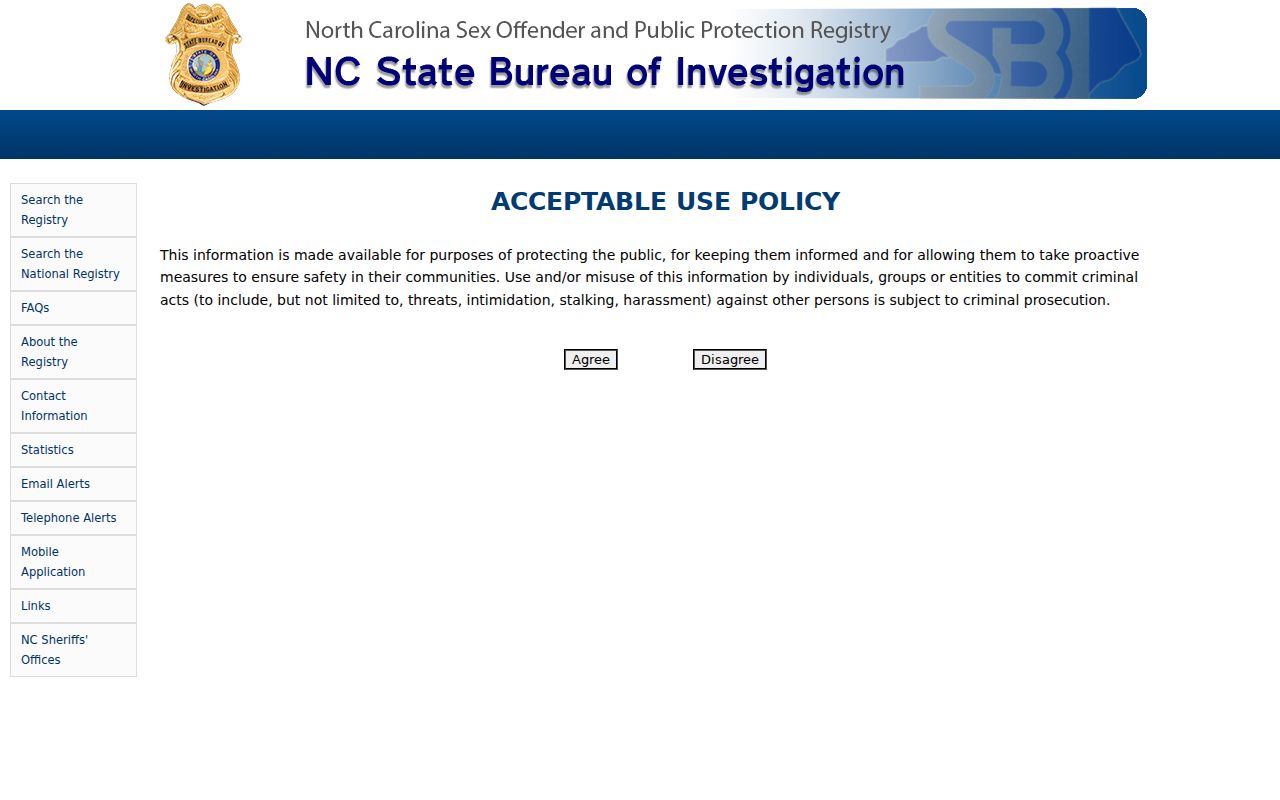
The screen separates name, address, and geographic routes. Treat a registry result as an official record with a stated status and date, and never use it to threaten or harass a listed person.
Historical Winston-Salem Records Routes
When a current portal stops, local collections can bridge the gap. Forsyth County formed from Stokes County in 1849, so earlier county material may sit under Stokes or a church jurisdiction. Historic research should also test Winston, Salem, and Winston-Salem because the two towns consolidated in 1913.
The North Carolina Collection at Central Library describes its genealogy databases, newspapers, photographs, microfilm, local codes, and five-newspaper index.
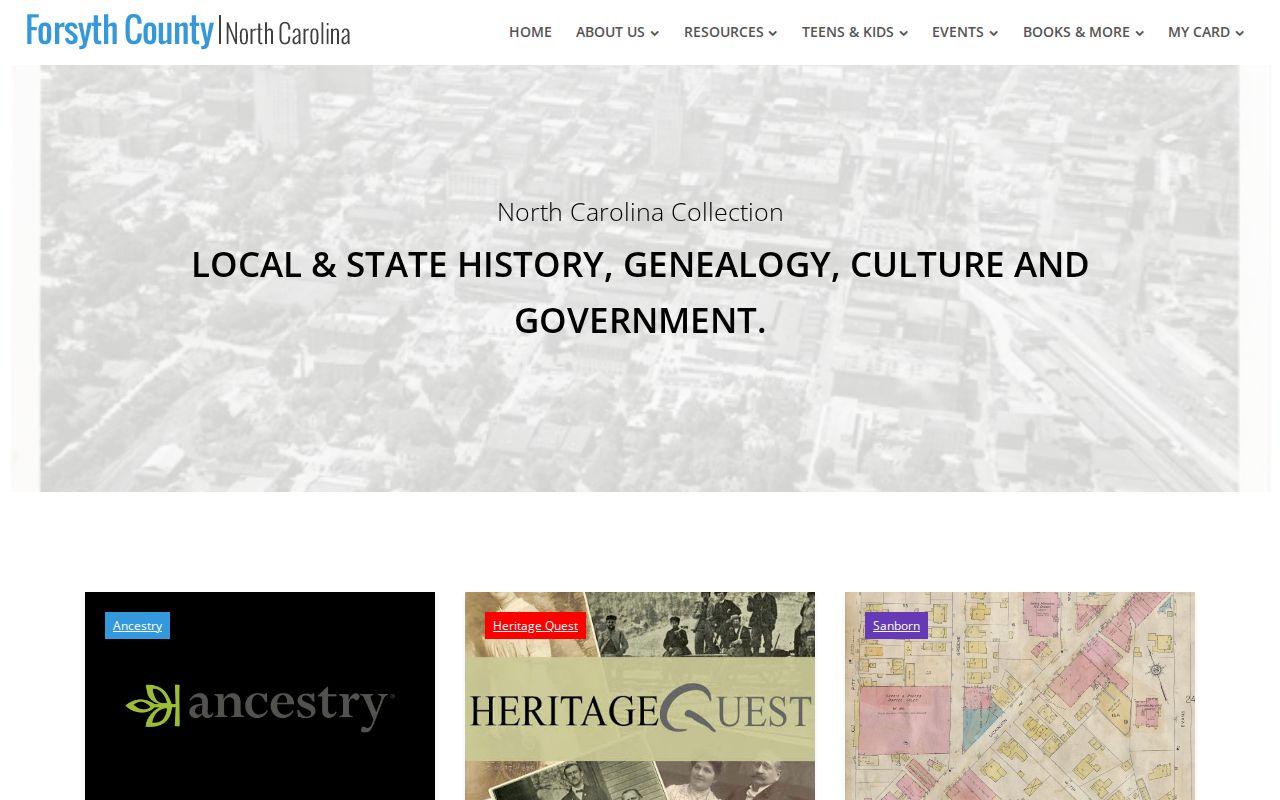
These sources can supply context when an agency index has no image or when a record predates the modern system. Search personal names with both older place names and ask staff about materials that lack an online index.
Wake Forest’s Z. Smith Reynolds Library also outlines digital Winston-Salem research collections, including city directories covering 1879 through 1963.
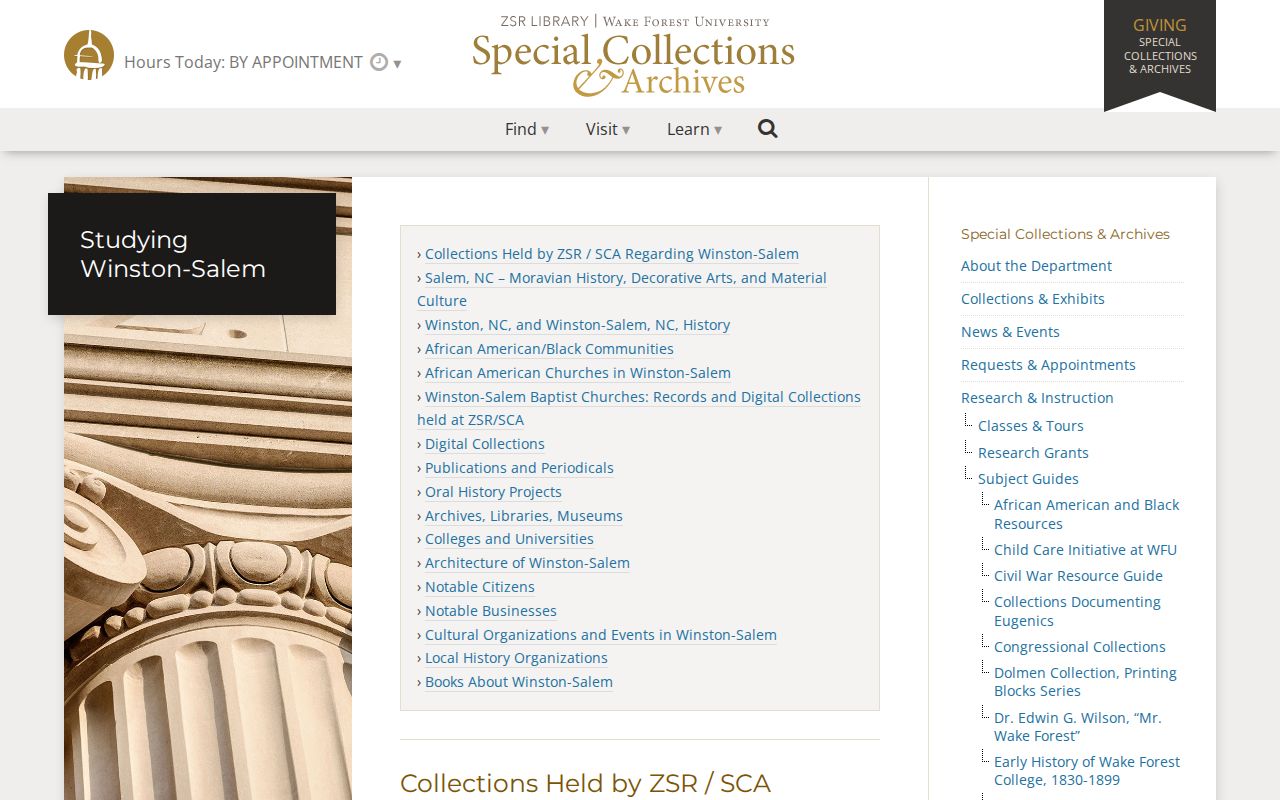
Directories are not agency case files, but they help place a person or address in time before returning to deeds, plats, court files, newspapers, or the State Archives catalog.
Statewide Winston-Salem Record Leads
Some records tied to Winston-Salem live only in statewide systems. The Secretary of State’s Business Registration Search returns entity status, registered agent, office addresses, officials, and filings. Professional licenses are split among issuing boards, with NC.gov and NCBOLD serving as gateways. The State Archives accepts catalog and staff-assisted research by county, record group, personal name, Winston, and Salem.
The official NCCash unclaimed-property search is another state-held name index.
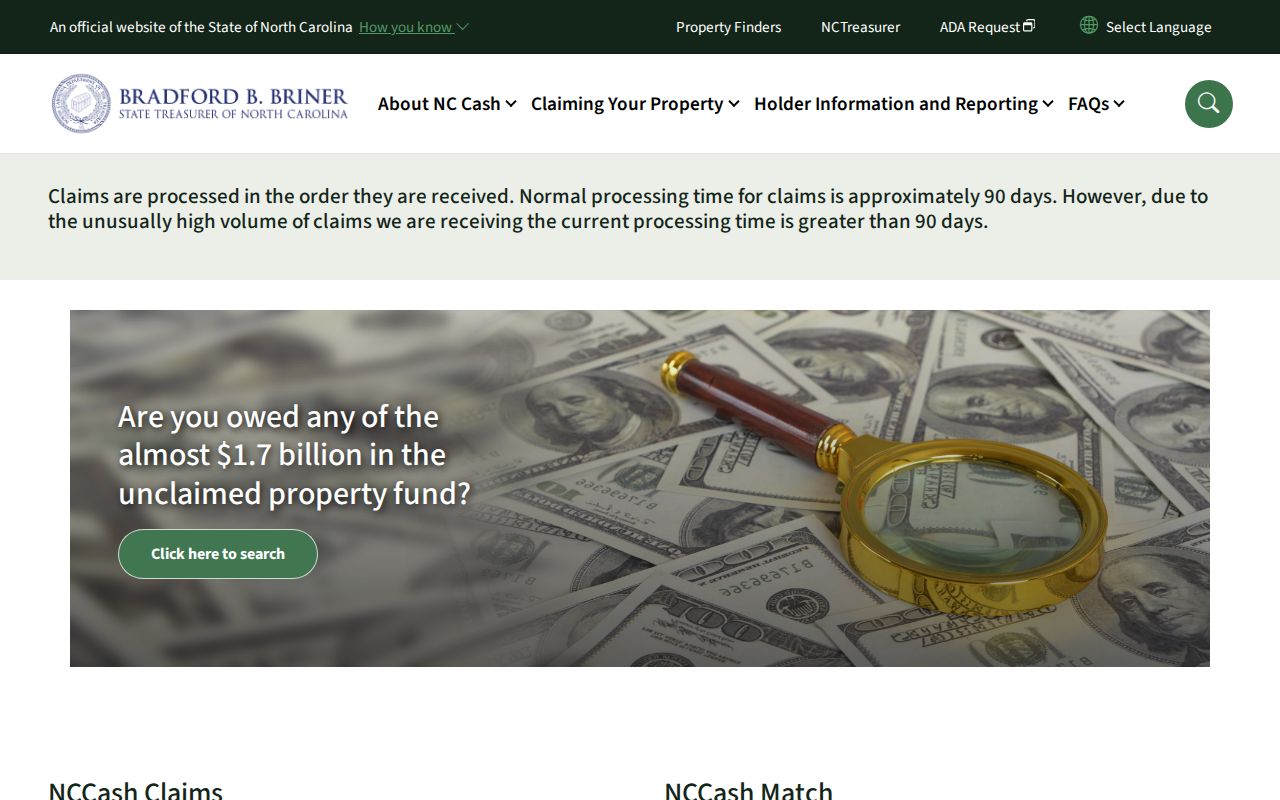
A match may provide a holder or address fragment, but only the Treasurer’s claim process can establish entitlement. Using the official route also avoids firms that charge to search a state service available at no cost.
Winston-Salem Records Terms Decoded
Office language can change the result of a request. These terms distinguish a locator entry from the underlying file and an ordinary copy from one meant for formal use.
- Custodian
- The office or official responsible for keeping and providing a record.
- Index
- A searchable entry that points to a record but may not contain the full document.
- Record image
- A digital view of the filed document, such as a scanned deed.
- Certified copy
- A copy authenticated by the keeper, often with a seal and separate statutory fee.
- Exemption
- A legal rule allowing or requiring an office to withhold a record or part of it.
- Grantor and grantee
- The party giving an interest and the party receiving it in a recorded land instrument.
A docket is the court’s chronological list of case events, not the full file. Read each portal label before treating an index entry as the underlying document.
Request Winston-Salem Public Records
Chapter 132 allows any person to inspect records at reasonable times and under reasonable supervision. An agency cannot require a reason for the request. G.S. 132-6 calls for copies as promptly as possible, but sets no fixed number of days. Ordinary copy charges may reflect actual reproduction cost, while an extensive request can bring a reasonable special service charge under G.S. 132-6.2.
- Identify the exact custodian. Use the city gateway for city files, the owning Forsyth department for county files, and the clerk for court material.
- Check the official index first. Save a case number, parcel PIN, book and page, document number, or other identifier that narrows the request.
- Describe an existing record, date range, subject, and preferred electronic format. Ask to inspect if a copy is not needed.
- Request a cost estimate before work begins. Recorder, court, and vital copy fees can follow laws outside the ordinary Chapter 132 cost rule.
- If material is withheld, ask for the specific legal basis and release of all nonexempt parts. Narrow or clarify an overbroad request when useful.
- Seek custodian or supervisor review after a denial. G.S. 132-9 permits a civil action to compel disclosure and may allow attorney fees under statutory conditions.
Vital certificates use the statutory application rather than a generic open-records request. The same distinction applies to restricted military discharges and sealed court files. Inspection may avoid copy expense, and a public office cannot force purchase when inspection will meet the need.
Lawful personal use. Access does not grant permission to intimidate or harm anyone. North Carolina stalking and cyberstalking laws may apply when record details support repeated harassment or fear.